
Wash a heavyweight cotton t shirt inside out, with similar colors, using the temperature and cycle allowed on its care label. For your 2026 care routine, avoid unnecessary heat, treat stains before drying, and support the damp shirt so its weight does not stretch the shoulders.
- A heavyweight cotton t shirt needs label-led washing, not extra heat because the fabric feels thick.
- Olivas Heavyweight Organic Tee contains 100% organic ring-spun cotton; check its care label before washing.
- Turn printed cotton T-shirts inside out and keep rough items out of the load.
- For 2026 laundry routines, choose drying methods that protect both the fit and the print.
Why this matters
A thick cotton shirt still needs careful handling. Fabric weight does not tell you whether a garment tolerates a hot wash, tumble drying, bleach, or a hot iron. The fabric, seams, collar, and any decoration all need compatible care.
Protect the fit you bought rather than trying to repair it after washing. If you are still choosing a size, start with how to choose a heavyweight cotton T-shirt that fits. Washing is not a dependable way to turn an unsuitable size into the right one.
How do you wash heavyweight cotton T-shirts without damage?
Use this 2026 care checklist before putting a thick cotton tee into the machine. The garment label takes priority over general cotton-care advice, including the steps below.
Read the label
Check the fiber content, wash temperature, drying instructions, and warnings about bleach or ironing. Look for separate instructions covering a print or other decoration.
If the label is missing, do not assume the shirt tolerates every treatment suitable for plain cotton. Start with a cautious approach and seek the seller's care instructions, particularly for a decorated garment.
Sort the load
Separate light and dark colors. Keep a cotton tee away from exposed zippers, hooks, hook-and-loop fasteners, and other surfaces that can rub or catch the fabric.
Avoid packing the machine tightly. Clothes need room to move and rinse; a crowded drum is not a shortcut to a clean shirt.
Check for stains
Find food marks, collar soil, and underarm buildup before washing. Use a stain treatment suitable for the fabric and color, following that treatment's directions.
Test unfamiliar products on a hidden area first. Do not scrub a printed design with a brush or rub a small spot aggressively; concentrated friction can change the surface appearance.
Turn it inside out
Turn the shirt inside out before loading it. This reduces direct rubbing against the visible outer surface and helps keep a printed design away from other garments.
Empty any pockets and remove loose items from the load. Inside-out washing reduces surface contact, but it does not make a print resistant to heat or unsuitable chemicals.
Measure detergent
Follow the detergent directions for your load, machine, and water conditions. More detergent is not automatically more cleaning power.
Choose a detergent compatible with the garment's care instructions. Do not add bleach simply because the shirt is cotton; color and decoration matter too.
Select the cycle
Choose a cycle and temperature permitted by the label, without adding heat the shirt does not need. A gentle cycle reduces agitation, but it does not compensate for an unsuitable temperature.
Treat heavy soil before washing rather than automatically selecting the hottest setting. The aim is a clean shirt with its original fit and surface intact.
Inspect before drying
Take the tee out promptly and check any treated stains. If a mark remains, address it before exposing the garment to drying heat, which can make some stains harder to remove.
Gently straighten the collar, side seams, and hem. Do not pull forcefully on a wet neckline or twist the shirt into a tight rope to remove water.
Dry with support
Follow the drying instructions. If flat drying is permitted, spread the shirt on a clean drying surface and arrange it in its natural shape.
If tumble drying is permitted, use an allowed setting and avoid leaving the garment tumbling after it is dry. Heavy fabric is not permission to increase the heat.
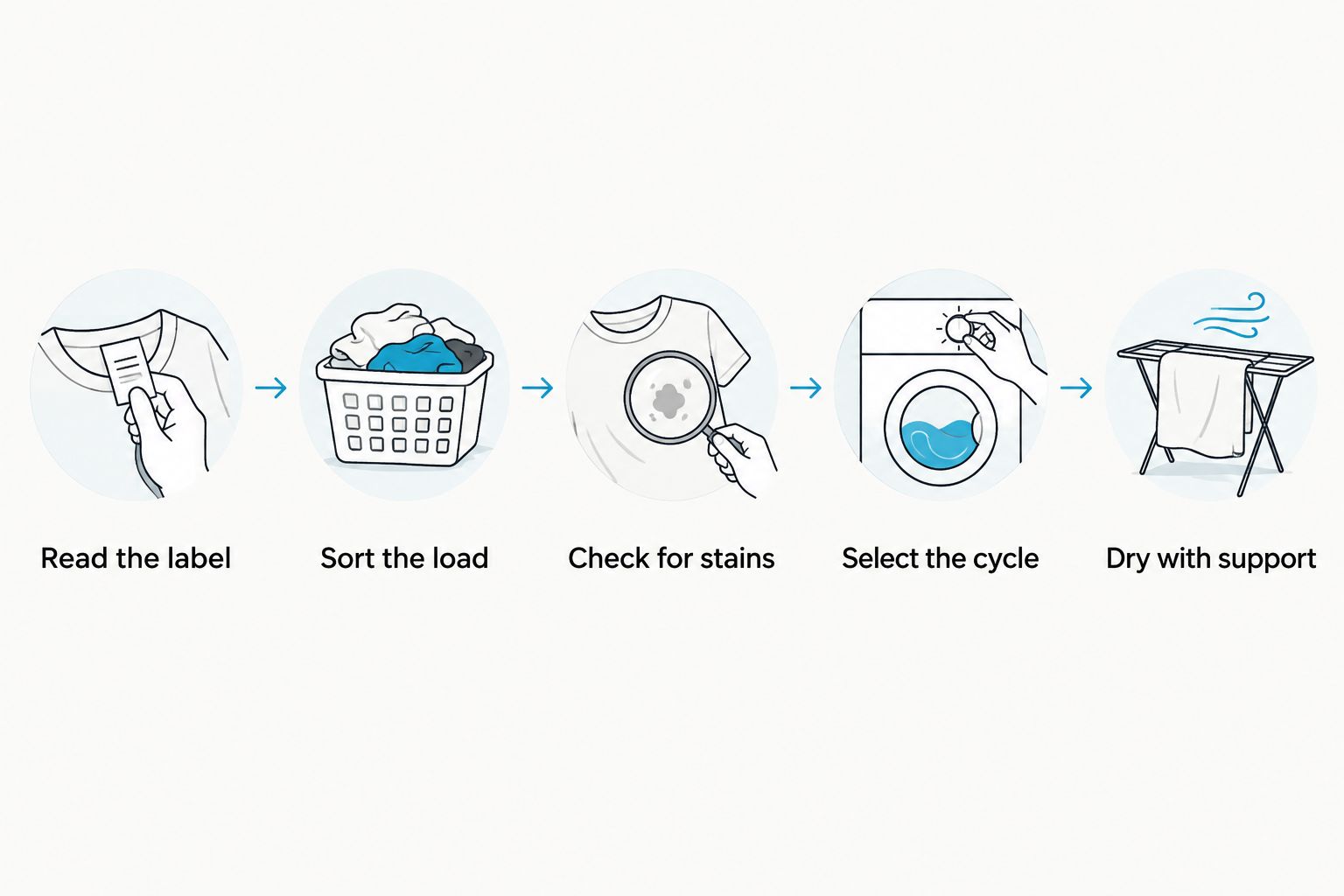
Which drying method protects a heavyweight cotton tee?
Best for preserving fit: the label-approved method that avoids unnecessary heat and stretching. There is no drying method that overrides a manufacturer's instructions. Compare these options only after checking what the shirt allows.
| Drying option | Best for | Advantage | Limitation |
|---|---|---|---|
| Flat drying | Supporting a heavy, damp garment | Spreads the shirt's weight across a surface | Needs space, airflow, and a clean support |
| Rack drying with broad support | Air drying when the label permits it | Avoids concentrating the weight on narrow shoulder points | A narrow rail can leave a fold mark |
| Tumble drying when permitted | Machine drying a garment labeled for it | Avoids finding space for a drying surface | Heat and continued tumbling can affect fit and surface wear |
| Hanging from a narrow hanger | Lightweight handling after a shirt is dry | Keeps a dry shirt accessible | A heavy wet tee can pull at the shoulders |
For flat drying, lay the garment without stretching it to match an imagined outline. Smooth obvious folds with your hands, then let the shirt dry with airflow around it. Avoid stacking damp fabric or folding a wet tee away.
A towel underneath can absorb moisture, but a saturated towel leaves the shirt resting on a wet surface. Replace it when needed, or use a suitable drying rack that supports the garment without pulling it out of shape.
What do cotton care-label temperatures mean?
The number inside a wash-tub symbol is a maximum wash temperature, not a target you must reach. A 30°C wash symbol sets a lower maximum than a 40°C wash symbol. Bars beneath the tub add instructions about a gentler washing process.
Do not confuse fiber content with washing temperature. A label stating 100% cotton describes the fiber composition; it does not give permission to use the hottest cotton cycle on your machine.
The same distinction applies to organic cotton. Organic fiber content does not establish whether a finished garment can be tumble dried, bleached, or ironed over its decoration. Read the complete instructions, not just the material line.
For 2026 shopping decisions, make care requirements part of the comparison. A shirt that fits your existing laundry routine is easier to look after than one whose instructions you will struggle to follow.
Why heavyweight cotton T-shirt care varies
A shirt's weight is only part of its care needs. These factors explain why similar-looking tees can require different handling:
- Fiber composition: A cotton garment and a blended garment do not automatically share the same care instructions.
- Fabric construction: The way the fabric is made affects its stretch and how it responds to handling.
- Finishing: Treatments applied during manufacture can affect the finished garment's behavior. Follow any stated care instructions rather than assuming a treatment is present.
- Decoration: Prints, embroidery, and other additions need care compatible with both the decoration and the base fabric.
- Color: Separate colors appropriately and use cleaning products suitable for the garment.
- Drying method: Heat, tumbling, and the way a wet shirt hangs place different demands on the fabric.
When comparing the Olivas Heavyweight Organic Tee, the verified product details are heavyweight 100% organic ring-spun cotton and a unisex cut. Those details describe the garment, not a tested shrinkage rate or a complete washing specification.
Olivas Heavyweight Organic Tee is best for shoppers seeking a heavyweight, 100% organic cotton T-shirt with a unisex cut. Its suitability for your laundry routine still depends on the garment's care instructions. Do not treat the words heavyweight or organic as proof of easy machine drying.
How do you keep a boxy tee from losing its shape?
A boxy fit depends on the relationship between the body width, length, sleeves, and shoulders. Shrinkage or stretching can alter that balance even when you can still put the shirt on.
The same care principle applies to washing box tees without shrinkage: preserve the intended proportions instead of using heat to adjust the fit. No general washing routine guarantees zero dimensional change for every cotton garment.
Before its first wash, notice where the hem falls and how the shoulder seams sit. A simple reference photo helps you distinguish a changed fit from a shirt that was already shorter or wider than expected.
Handle the wet garment gently. Support its body when lifting it from the machine, rather than carrying the full weight by the collar. Lay it out naturally and smooth the seams without pulling the body longer.
If a dried tee feels different, check it fully before attempting a fix. Repeated hot washing is not a controlled alteration method, and pulling a wet garment hard can create a different shape problem.
Can you wash a heavyweight cotton tee with regular laundry?
You can wash a heavyweight cotton tee with compatible laundry when colors, care instructions, and surface textures match. Sort by care needs rather than treating every item in the basket as an equal companion.
A soft cotton shirt is a better load companion than an item with exposed hardware that can catch the fabric. Thick towels also have a rougher surface than smooth clothing, so keep surface friction in mind when protecting a tee's finish.
Give dirty items the treatment they need before combining them. A garment requiring an intensive wash should not dictate a harsher cycle for a shirt whose label calls for gentle care.
Should you wash a heavyweight cotton T-shirt after every wear?
Wash a heavyweight cotton T-shirt when sweat, odor, visible soil, or the circumstances of wear call for it. There is no universal wear count that fits every person or activity.
After a brief, clean wear, air the shirt before putting it away. After sweaty use or a spill, address the condition rather than waiting for a fixed laundry day.
A 2026 care routine does not need extra products or complicated steps. Consistent sorting, sensible stain treatment, and label-approved drying are more practical than trying to reverse damage later.
FAQ
What's the safest way to wash a heavyweight cotton t shirt?
The safest approach is to follow the heavyweight cotton t shirt's care label, turn it inside out, and wash it with compatible colors and fabrics. Avoid unnecessary heat, rough load companions, and forceful handling while wet.
Does heavyweight cotton mean a T-shirt will not shrink?
Heavyweight cotton does not mean a T-shirt will not shrink. Fabric weight alone does not establish shrink resistance, so use the garment's washing and drying instructions.
Can I put a heavyweight cotton T-shirt in the dryer?
Put a heavyweight cotton T-shirt in the dryer only when its care label permits tumble drying. Use an allowed setting and avoid continuing the cycle after the garment is dry.
Should I wash a printed cotton T-shirt inside out?
Wash a printed cotton T-shirt inside out to reduce direct rubbing against its outer surface. You still need to follow the temperature, detergent, drying, and ironing instructions for the garment.
Can I use hot water to make a heavyweight tee fit better?
Do not use hot water as a dependable way to resize a heavyweight tee. Changes in length and width are not controlled, and heat can also affect decoration.
How should I care for an organic cotton tee in 2026?
Care for an organic cotton tee in 2026 according to its finished-garment label, not its organic fiber description alone. Check washing, drying, bleaching, and ironing instructions separately.
Is the Olivas Heavyweight Organic Tee made from cotton?
The Olivas Heavyweight Organic Tee is described as heavyweight 100% organic ring-spun cotton with a unisex cut. Check the garment's care label for its specific washing and drying instructions.
One last thing
The moment you lift a wet tee matters too. Supporting the body of the shirt avoids putting all its damp weight through the neckline or shoulder seams. Make that small habit part of the routine before choosing another laundry product.