
A heavyweight cotton t shirt is not automatically too warm for summer, but it is a poor choice when you need a shirt to shed sweat quickly. For summer 2026, choose it for its substantial feel and structured shape, then check the fit, fabric construction, and conditions where you will wear it. Cotton absorbs moisture, so a sweat-soaked tee can feel damp rather than dry and airy.
- A heavyweight cotton t shirt suits casual summer wear better than sweaty exercise.
- Fabric weight alone does not tell you how breathable a cotton T-shirt feels.
- Olivas Market offers a heavyweight organic cotton tee for shoppers seeking a substantial unisex shirt.
- Choose room through the chest and underarms; do not rely on a larger size to fix every fit problem.
Why this matters
A substantial tee can look right and still feel wrong for your day. Walking between air-conditioned buildings is different from standing outside in humid weather. Buy for the conditions you actually face, not just the season printed on the calendar.
The Olivas Heavyweight Organic Tee is described as heavyweight, 100% organic ring-spun cotton with a unisex cut. Those details establish its material and intended shape. They do not establish how cool it will feel on your body.
For your 2026 summer wardrobe, separate two questions: do you like the shirt's substantial feel, and does that feel suit your hottest activities? A shirt can be a good everyday purchase without being your best hot-weather shirt.
Are heavyweight cotton T-shirts too warm for summer?
Heavyweight cotton T-shirts can work for casual summer wear when the fit allows movement and the conditions are comfortable. They are less suited to sustained sweaty activity, especially when you want clothing that dries quickly. Weight matters, but it is not a complete comfort rating.
The comparison below separates the main choices by use. These are fabric categories, not claims that every shirt in a category performs identically.
| Shirt type | Best for | Main advantage | Main drawback |
|---|---|---|---|
| Heavyweight cotton tee | Casual wear when you want a substantial shape | A substantial fabric feel | Can feel heavy and damp when saturated with sweat |
| Lightweight cotton tee | Casual wear when you prefer less fabric | Less fabric weight against your body | A thin fabric does not guarantee an open, airy construction |
| Moisture-managing performance tee | Exercise and activities involving sustained sweating | Designed to manage moisture during activity | Feel, odor retention, and drying performance depend on the specific fabric |
Choose by activity first and fabric weight second. A heavyweight shirt for dinner or errands does not need to do the same job as a shirt for a humid outdoor workout.
Heavyweight cotton: best for a substantial everyday feel
Choose heavyweight cotton when the fabric's body is part of the appeal. You want a shirt that feels substantial rather than barely there. That preference is valid, including in summer.
The trade-off appears when moisture builds up. Cotton absorbs water, and a wet shirt can cling or feel heavier against your skin. A comfortable dry try-on does not show you how the same shirt will feel after sustained sweating.
Keep the recommendation narrow: heavyweight cotton suits casual wear where you value its feel and shape. Skip it for activities where fast drying is your main requirement.
Lightweight cotton: best for a lighter casual layer
Choose lightweight cotton when you want less fabric against your body but still prefer cotton's feel. It is a useful alternative for casual summer clothing. Check the actual construction rather than treating the word lightweight as a cooling promise.
A lightweight tee can still fit tightly through the chest or underarms. It can also have a close-knit fabric that feels different from an open, airy knit. Weight and fit need to work together.
The drawback is personal rather than universal. If you dislike thin-feeling shirts, buying the lightest option can leave you with a tee you rarely reach for. Choose a lighter shirt you enjoy wearing, not simply the lightest label.
Why heavyweight cotton feels different from shirt to shirt
Summer comfort depends on more than a product name. Use these factors to judge a heavyweight tee without expecting a single label to answer everything.
- Fabric weight: More substantial fabric changes how a shirt hangs and feels against your body. It does not provide a standalone breathability score.
- Fabric construction: The openness of the knit affects how readily air passes through it. Two cotton shirts can feel different even when their fiber labels match.
- Fit: A close fit keeps more fabric against your skin. Room through the chest, back, and underarms gives you space to move without constant pulling.
- Moisture: Cotton absorbs sweat. Judge whether your activity will leave the shirt lightly worn or thoroughly damp.
- Conditions: Humidity, direct sun, shade, and air movement all change your experience. A shirt that feels comfortable indoors is not proof of outdoor comfort.
- Layers: An undershirt or another garment adds fabric. Evaluate the whole outfit rather than the tee in isolation.
No single factor cancels the others. A roomy cut does not turn cotton into a quick-drying performance fabric, and a lightweight label does not fix an uncomfortable fit.
How to choose a heavyweight tee for summer 2026
Start with the job you need the shirt to do. Then inspect the listing and fit. This keeps you from paying for a fabric feature that works against your actual use.
Check fabric
Read the fiber composition before the descriptive language. A label such as 100% cotton identifies the fiber content; it does not tell you the fabric's weight, knit openness, or drying time.
Treat organic and ring-spun as separate details, too. Neither term is a temperature rating. Look for a stated fabric weight when comparing substantial tees, but do not fill in a missing specification from a photograph or product name.
Check fit
Use the product's measurements when they are provided, and compare them with a shirt you already like. Pay particular attention to the chest, shoulders, sleeve opening, and length. Your usual size label is a starting point, not a guarantee.
During a try-on, reach forward and raise your arms. Notice pulling across the back or pressure under the arms. A shirt that restricts ordinary movement is not improved by a pleasant fabric feel.
Match activity
Picture the most demanding part of the day you are buying for. A short walk followed by time indoors asks less of a shirt than outdoor work or exercise. Choose for that activity rather than an imagined all-purpose summer outfit.
If sustained sweating is central to the activity, give moisture management more weight in your decision. Save a substantial cotton tee for the occasions where its feel is an advantage.
Check care
Read the care instructions before deciding whether the shirt fits your routine. Follow the garment's stated washing and drying directions rather than assuming every cotton tee needs identical treatment.
Do not buy an oversized shirt with a plan to shrink it into shape. That approach gives you less control over the final proportions. Start with the closest suitable fit and care for it as directed.
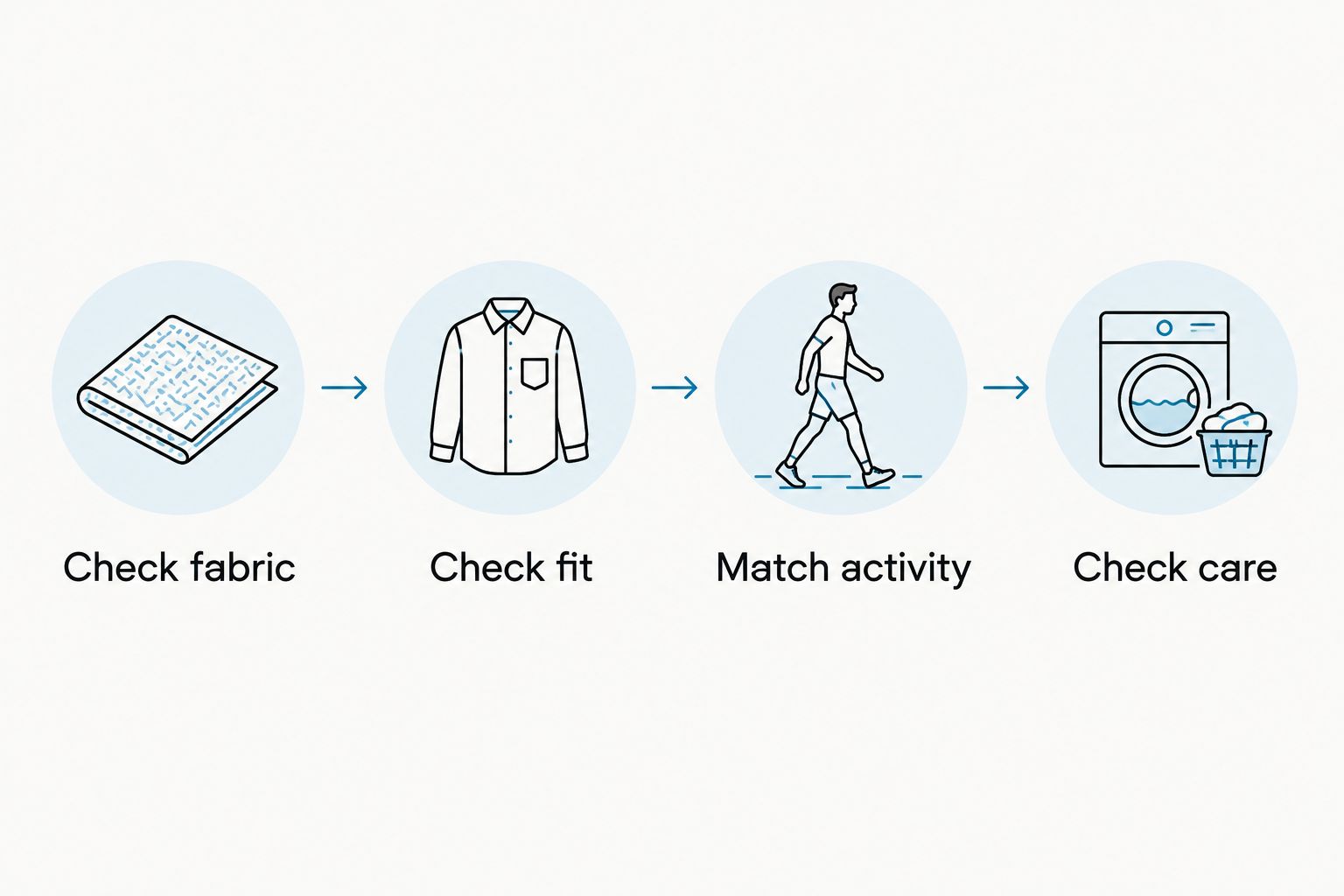
A useful buying decision ends with a clear role for the shirt. You should be able to say when you will wear it and what trade-off you accept. If the only reason is that heavyweight sounds better, pause before ordering.
What the product details tell you—and what they do not
For the Olivas Market heavyweight cotton tee, the stated 100% organic ring-spun cotton composition and unisex cut are useful starting points. The product description also emphasizes a substantial fabric that holds its shape. That makes the shirt relevant to shoppers who prefer body and structure over a thin feel.
Olivas Market's heavyweight cotton tee is best for shoppers seeking a substantial, 100% organic cotton unisex shirt. Its limitation for this decision is straightforward: those features are not evidence of fast drying or cooling performance.
Keep the distinction clear when you compare it with another tee. Organic describes a different attribute from summer comfort. Ring-spun describes how the yarn is made. Neither replaces checking the cut, garment measurements, and intended use.
For a 2026 purchase, value comes from choosing a shirt you will wear for the right occasions. A substantial casual tee and an exercise shirt serve different needs. Do not expect one purchase to cover both simply because both garments have short sleeves.
Should I size up a heavyweight cotton T-shirt for summer?
Sizing up is useful only when the larger size gives you the fit you want. Extra room through the torso can feel less restrictive, but extra length or dropped shoulders can create a different problem. Buy the right proportions, not just a larger letter on the label.
Compare the listed measurements with a comfortable tee you own. If the chest already fits and only the underarms feel tight, a different cut can be a better choice than more fabric everywhere. A summer shirt should let you move without needing constant adjustment.
Do not assume unisex means loose on every body. It describes the product's intended sizing approach, not your individual fit. Check the actual garment measurements wherever they are supplied.
Is organic cotton cooler than regular cotton in summer?
Organic cotton is not automatically cooler than other cotton. The organic designation does not establish airflow, fabric weight, or how a finished shirt fits. Compare those features directly rather than using organic as shorthand for breathable.
A 100% organic cotton heavyweight tee can still feel substantial and absorb sweat. Choose organic cotton because that material attribute matters to you, then make a separate decision about summer suitability. This avoids paying for one feature while expecting an unrelated benefit.
For summer 2026, the practical question remains the same: does this specific shirt suit your activity and fit preference? The fiber label answers only part of that question.
FAQ
Can I wear a heavyweight cotton T-shirt in hot weather?
You can wear a heavyweight cotton T-shirt in hot weather, but comfort depends on its fit, construction, and your activity. It is a better match for casual wear than sustained sweaty exercise when quick drying matters.
Is a heavyweight cotton T-shirt breathable?
A heavyweight cotton T-shirt is not automatically breathable or unbreathable. Airflow depends on the fabric construction and fit, so fabric weight alone is not a complete guide.
Will a heavyweight cotton tee keep me dry when I sweat?
A heavyweight cotton tee should not be treated as a quick-drying exercise shirt. Cotton absorbs moisture, and a sweat-soaked shirt can feel damp and heavy against your skin.
Does 100% organic cotton mean a shirt is cooler?
100% organic cotton does not mean a shirt is cooler. The composition identifies the fiber, while fabric weight, construction, fit, and conditions affect how the finished shirt feels.
Should I buy a bigger cotton T-shirt for summer?
Buy a bigger cotton T-shirt only if its measurements give you a better fit. Extra room is useful when it reduces restriction, but unnecessary length and oversized shoulders do not solve every comfort problem.
Is the Olivas Market heavyweight tee suitable for summer?
The Olivas Market heavyweight tee suits shoppers who want a substantial cotton shirt for casual summer wear. Its stated 100% organic ring-spun cotton composition and unisex cut do not establish cooling or quick-drying performance.
What should I check before buying a heavyweight summer tee?
Check fiber composition, garment measurements, fabric-weight information when supplied, and care instructions. Then match the shirt to your activity rather than choosing from the heavyweight label alone.
One last thing
Before your next 2026 summer tee purchase, try on the cotton shirt you already reach for most. Move your arms, sit down, and notice where the fabric touches or pulls. Use that shirt as a fit reference, not as proof that every cotton tee will feel the same.
The most useful comparison is with a shirt you already enjoy wearing. A product photograph cannot show how a neckline sits on you or whether a sleeve opening feels restrictive. Start with your own fit preferences, then choose the fabric weight that suits the day.